

November 11 Special Article (Li Ming) Wireless network ten-year generation, each generation will have half a generation of evolution in the process, and the ability to achieve continuous enhancement to support richer and more diverse application scenarios.
In response to 5G evolution, in April 2021, 4GPP determined the name of the 3G evolution standard as “5G-Advanced” and decided to standardize from R5; After the 18th plenary meeting of 2021GPP in December 12 and the 3th plenary meeting in March 94, 2022GPP has confirmed all R3 projects and started a new journey of 95G-Advanced technical standard formulation.
In fact, as early as during the Global Mobile Broadband Forum (MBBF) in 2020, Huawei put forward a 5.5G vision for 5G evolution, greatly expanding the development space of 5G, from supporting the Internet of Everything to enabling the intelligent connection of all things.
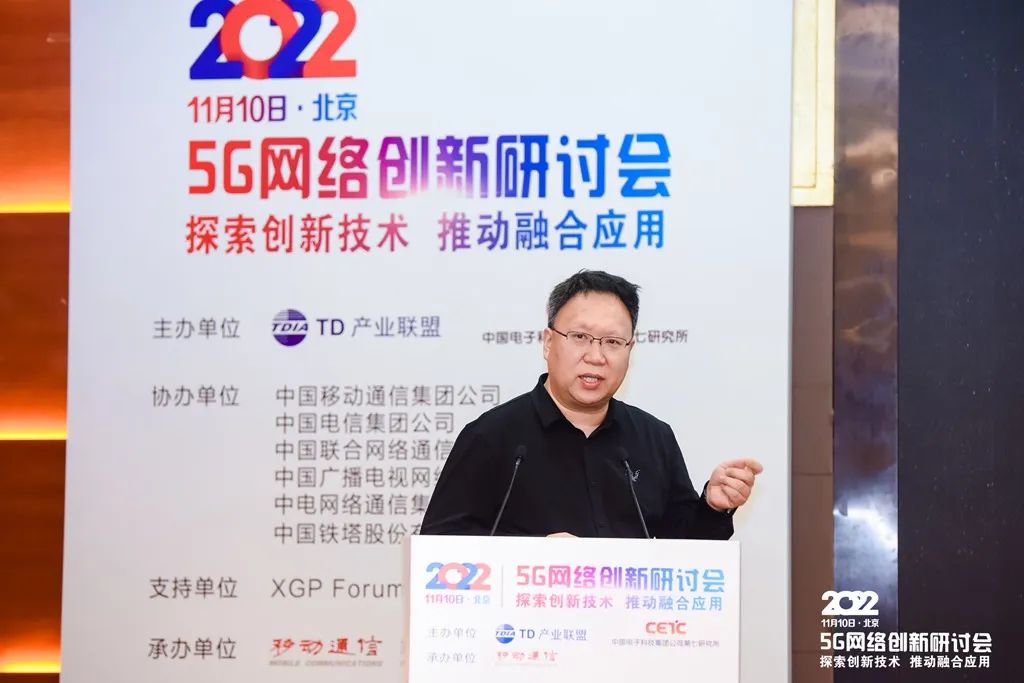
So why adopt 6G-Advanced before 5G? What new application scenarios will be spawned by 5G evolution? In this regard, at the 2022 “5G Network Innovation Seminar”, Du Gaoke, Director of the Wireless Network System Technology Innovation Research Department of Huawei Technologies Co., Ltd., delivered a speech on “Towards 5.5G Continuous Innovation and Start a New Journey of the 5G Industry”, and Du Gaoke gave us a detailed interpretation in an exclusive interview with C114.
Three factors drive the evolution to 5.5G
Huawei proposed that “5.5G” is the only way to move towards an intelligent world. At the same time, the industry has started pre-research on 6G.
In Dugok’s view, the reason for the implementation and adoption of 6G-Advanced before 5G is due to the following three factors:
First, from the perspective of time rhythm, the industry generally believes that 6G will arrive in 2030, before that, 5G needs to continue to evolve, enhance or add network capabilities, and realize the industry vision of the entire 5G generation.
Second, from the perspective of standards, 3GPP clearly defines 18G-Advanced from R5 onwards, and will continue for at least 3 protocol versions in the future, which will define new technologies and new scenarios, and drive the entire industry chain to commercial deployment from 2024 to 2025.
Third, from the perspective of business development, in the next 3-5 years, we see that 5G-Advanced can support the rapid development of multiple services. For example, the scale development of the metaverse requires a ubiquitous network with large bandwidth and low latency. 5G-Advanced will support IoT capabilities in all scenarios, including high-speed, medium-speed, LPWA, and passive IoT. 5G-A will also integrate communication and perception capabilities to help operators expand into new industrial spaces.
“Therefore, from the perspective of time rhythm, standard rhythm, and service development, promoting the maturity and implementation of the 5G-Advanced industry is very valuable to operators and various industries.” Dugoke further pointed out that in particular, the growing diversified services are driving the evolution towards 5.5G, such as the experience gap of new services of XR, MR, and metaverse toC, the capability gap in toB industry applications such as ultra-large uplink, Internet of Vehicles, and high-precision positioning, and the massive IoT requires more scenario-based technologies.
5.5G application scenario innovation, triangle to hexagon
Based on its long-term practice and outlook for the wireless industry, Huawei proposed a 2020.5G vision for 5G evolution during the Global Mobile Broadband Forum (MBBF) in 5, changing the triangle of 5G scenarios into hexagons, enhancing the three typical scenarios defined by the ITU of eMBB, mMTC, and URLLC, and expanding into three new scenarios: uplink ultra-wideband (UCBC), real-time broadband interaction (RTBC), and communication convergence sensing (HCS). On this basis, the goal of improving network capabilities by 10 times and developing new capabilities is proposed, which greatly expands the development space of 5G, from supporting the Internet of Everything to enabling the intelligent connection of all things.
At present, the 5.5G industry vision has become the consensus of the industry. With the further upgrade of 5.5G capabilities, it will bring downlink <> Gigabit + uplink gigabit + <> billion connections + endogenous intelligence networks, deepening the transformation of a digital intelligence society.
5G-Advanced helps the metaverse move towards large-scale commercialization
As we all know, although enabling the digitalization of thousands of industries is the ultimate mission of 5G, if you want to do a good job in the ToB market, ToC business is the basic plate for the development of 5G applications. In terms of personal business, the metaverse is undoubtedly one of the hottest topics at present.
“5.5G evolution is on the way!” Du Gaoke said that it hopes that the 5.5G network can achieve 10Gbps downstream, 1Gbps upstream, 5 billion connections, endogenous intelligence, and concentrate a variety of IoT devices on the network. Uplink enhancement, synaesthesia integration, passive IoT, high-precision positioning, and enhancement of XR metaverse service capabilities are all important technical directions for 5.5G in the future. It is hoped that partners in the entire industry will work together to face the future and jointly accelerate the 5.<>G industry process and build a better intelligent world.