


The core value of 5G is to support differentiated application scenarios, and the outbreak of the small cell market is just around the corner.
After three years of 5G commercial deployment, China’s 5G construction has achieved outstanding results, with more than 5.220 million 5G base stations, accounting for more than 60% of the world’s total <>G base stations. Behind the deepening of coverage, it has become an industry consensus that small cells have become a necessary means of network construction, and the demand has become clearer and more urgent.
Among them, as an expert in radio access systems, since the commercial use of 5G, Hengxin Technology has promoted the development of 5G from multiple dimensions such as technical standards, product research and development, and industrial ecology, and has continuously empowered the digital transformation of the industry by relying on the leading advantages of 5G technology and strong innovation capabilities.
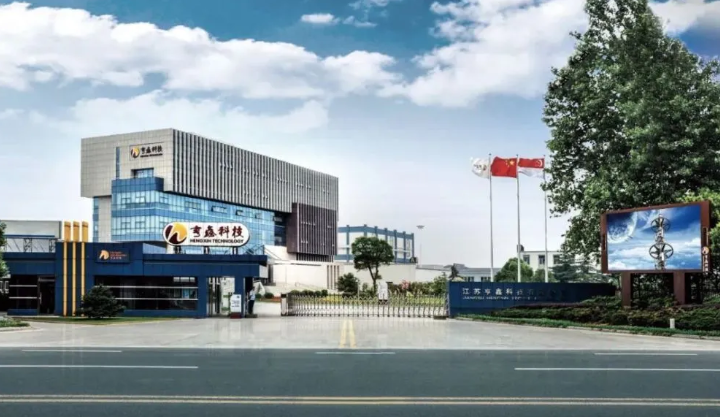
A few days ago, Fu Xiao, chief technology officer of Hengxin Technology, pointed out in an interview with the “Communications Industry News” (net) all-media reporter that the current 5G application has penetrated into thousands of industries, facing the future development of 5G, thousands of industries show differentiated and complex characteristics, and the outbreak of the small base station market is just around the corner.
The key to high-quality 5G network coverage
As the closest field to users in mobile networks, radio access networks face diversified deployment methods, vertical business scenarios and differentiated performance requirements in the 5G era, however, the ultra-high traffic, ultra-high data connection density and wide-area coverage requirements brought by 5G, and the existing 5G network has insufficient capacity and insufficient coverage, and it is no longer possible to achieve the above coverage requirements by relying only on 5G macro base stations.
Based on the wireless access requirements of 5G network applications, indoor services, as an important part of the radio access network, will further increase the proportion, thereby driving the overall transformation of indoor network construction to digitalization, and the traditional 5G room division construction faces challenges such as greater bandwidth, higher capacity, lower latency, easy deployment, and easy monitoring. On the other hand, the traditional passive room division 5G evolution has problems such as increased loss in higher frequency bands, device updates, limited coverage and MIMO capabilities, and operators lack low-cost digital room division evolution solutions.
It is reported that according to the planning of 3GPP organization, wireless base stations are divided into 4 categories, namely macro base stations, micro base stations, picobase stations and flying base stations, which are mainly divided according to power, macro base stations are larger in size, the largest in power, the largest coverage, the smallest power of the flying base station, the smallest coverage, in addition to the macro base station, the other three categories are classified as small base stations, compared with traditional macro stations, small base stations have four advantages:
One is low CAPEX. Compared with traditional primary equipment base stations, 5G small base stations can quickly meet operators’ coverage requirements in various scenarios with low-cost solutions.
The second is its own capacity. Compared with the traditional passive room sub-solution, it can provide 5G multi-cell and 5G and 4G dual-mode deployment capabilities, which can meet the needs of most scenarios and provide better service experience.
Third, the network is convenient. 5G small base stations have the characteristics of small size, simple installation, low power consumption, and flexible deployment, which can adapt to centralized deployment and site sinking, and effectively solve the coverage problems of various indoor building layouts.
Fourth, it is easy to control. The design of 5G small base stations considers the perfect monitoring management and network maintenance functions, and can carry out refined and visual control for 5G room sub-networks, minimize manual intervention, reduce maintenance costs, and save operator OPEX.
Relevant data show that in the ultra-dense networking scenario, the spacing between small cells will be reduced to 10~20 meters, and according to the calculation of 20%~50% of the coverage area of small cells to hotspot macro base stations, the market space of domestic 5G small cells will reach 658.1644 billion ~ <>.<> billion yuan.
It is worth noting that according to Fu Xiao, in terms of network security and stability, the same network architecture design makes the essence of small base stations and macro base stations no different, and because of the characteristics of accurate coverage, signal encryption, and algorithm guarantee of small base stations, the security of small cells is even better than that of macro stations.
“At present, telecom operators are very distressed about the location or entry of base stations, and in scenarios such as high-speed rail, old residential area renovation, and large hotels, small base stations have broad market prospects because of their simple structure and relatively easy construction.” Fu Xiao pointed out that 5G small cells are an important guarantee for achieving global coverage of high-quality 5G networks, which is of great significance for improving 5G networks and deepening 5G vertical applications.